
Discover how software integration transforms traditional industrial automation into a connected and intelligent ecosystem, driven by data.
The New Paradigm of Industrial Automation
For decades, industrial automation has operated in closed silos.
Industrial programmable automation controllers (PACs) executed local control loops with minimal interaction with the outside world, if only through basic human-machine interfaces (HMIs).
Today, software integration breaks down these barriers by allowing field equipment to directly communicate with higher-level management systems like ERPs or cloud platforms. This convergence between Operational Technology (OT) and Information Technology (IT) is the foundation of Industry 4.0.
Succeeding in this integration doesn't simply mean plugging a network cable into a machine.
It involves rethinking the very structure of the data produced by sensors.
The challenge is to transform a raw electrical signal into contextual information that can be exploited by an artificial intelligence algorithm or a decision-making dashboard.
This transition demands rigorous software engineering applied to the physical world, where latency and reliability remain absolute priorities.
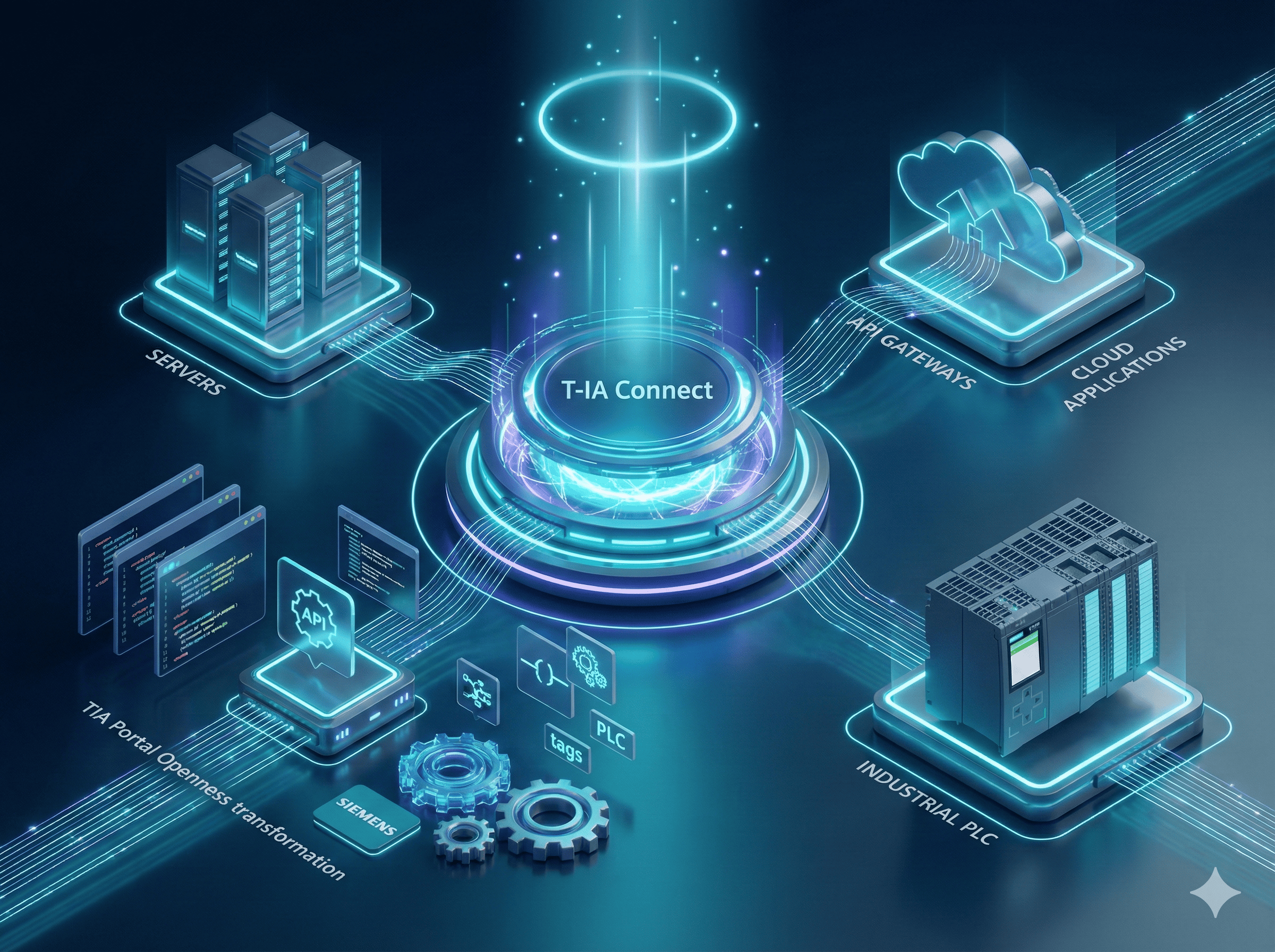
The Technical Pillars of Interoperability
At the heart of software integration lies communication protocols.
Two standards currently dominate the market to ensure the connection between hardware and software.
On one hand, OPC UA (Open Platform Communications Unified Architecture) offers rich semantic modeling and integrated security, ideal for structured exchanges within the factory.
On the other hand, MQTT (Message Queuing Telemetry Transport) stands out for its lightness and efficiency in transmitting data to the cloud via a publish/subscribe model.
Using these standards allows freeing oneself from proprietary protocols that previously locked machine parks.
To learn more about the technical specifications of these protocols, you can consult the resources of the OPC Foundation or the documentation of MQTT.org.
Modern software integration relies on this ability to have different brand equipment speak the same language within a coherent architecture.
// Simple example of publishing machine data in Python via MQTT
import paho.mqtt.client as mqtt
import json

client = mqtt.Client()
client.connect("broker.industrial.local", 1883)

# Simulation of data from a sensor
payload = {
    "sensor_id": "temp_01",
    "value": 42.5,
    "unit": "Celsius",
    "status": "OK"
}

client.publish("factory/workshop1/machineA/temperature", json.dumps(payload))
client.disconnect()
Security and Maintenance Challenges
The opening of production systems to the company network and the internet introduces critical vulnerabilities.
Software integration must therefore imperatively integrate cybersecurity from the design phase (Security by Design).
This involves segmenting networks, using TLS certificates for communications, and implementing secure gateways that act as firewalls between the deterministic world of automation and the open world of software.
Finally, maintaining these hybrid solutions requires new skills.
The modern automation specialist must now juggle with software version management (Git), container deployment (Docker), and API lifecycle management.
The success of an integration project is no longer measured solely by the machine's availability, but by the quality and permanence of the data flow it generates for the entire organization.